Standby generator installation, always-on power.
Generac-class whole-home standby generators with automatic transfer switch — installed, permitted, and NEC-compliant in Palm Beach County. When the grid fails during hurricane season, your home never skips a beat.
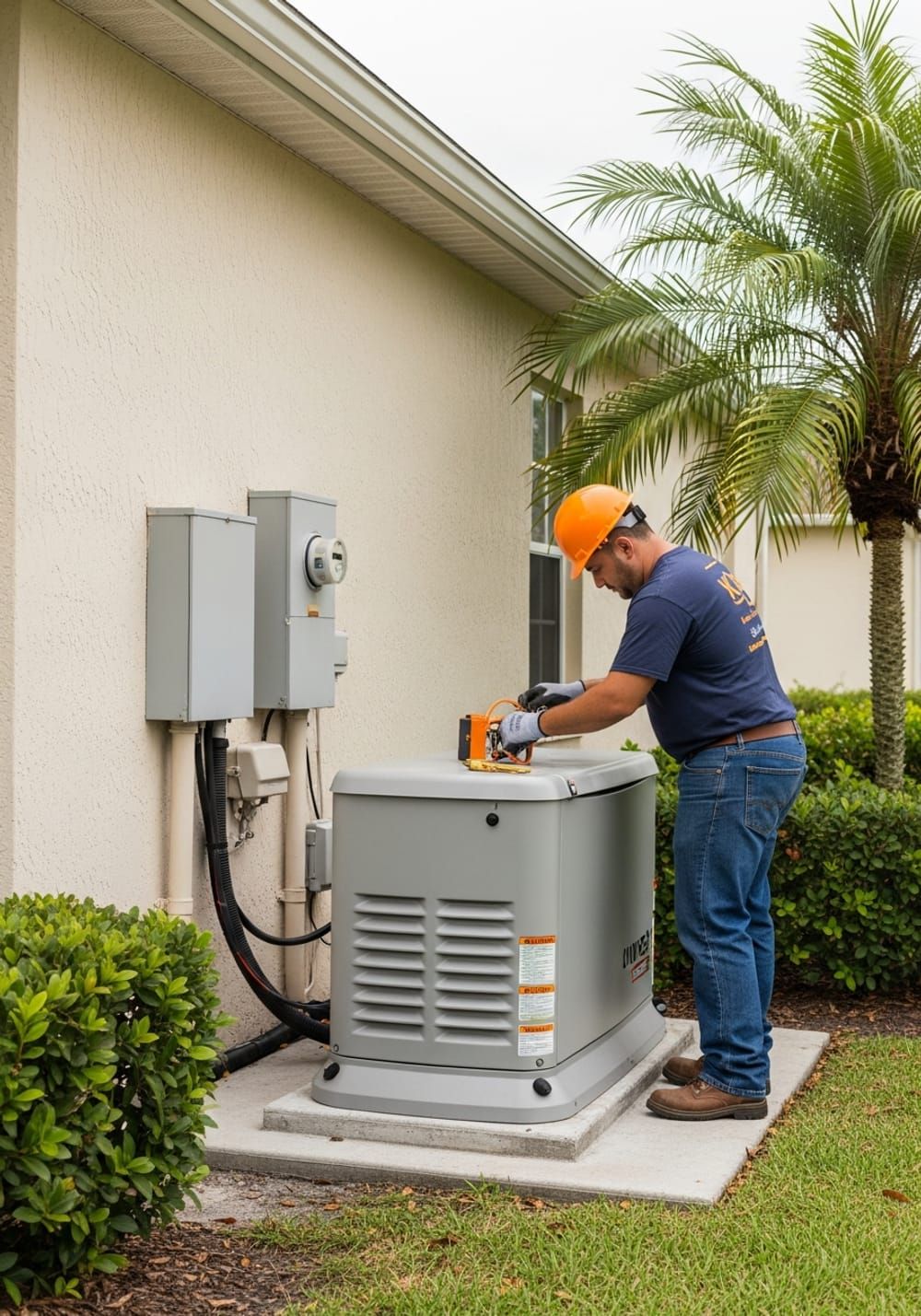
What whole house generator installation actually costs — and what you get
Whole house generator installation cost in Palm Beach County runs from roughly $8,000 to $20,000 or more installed — a range driven by kilowatt capacity, fuel supply (natural gas vs. propane), transfer switch complexity, and whether concrete pad work or a new gas line is needed. This page walks through every factor so you can compare options clearly before you call anyone.
A whole-home standby generator is different from a portable unit in one essential way: it is permanently wired to your electrical panel through an automatic transfer switch (ATS) and starts on its own within seconds of a utility outage — day or night, whether you’re home or not. During hurricane season in Palm Beach County, that difference is the gap between a house that keeps running and one that loses AC, food, refrigerated medication, and sump-pump protection for days.
We install Generac-class standby generators across all 11 communities we serve in Palm Beach County. We are a licensed, insured Florida electrical contractor, we pull every permit, and we size and wire every system to NEC Article 702. When you’re ready for a real number, use our electrical cost estimator for a ballpark, then request a free on-site estimate and we’ll measure your panel, calculate your load, and put it in writing.
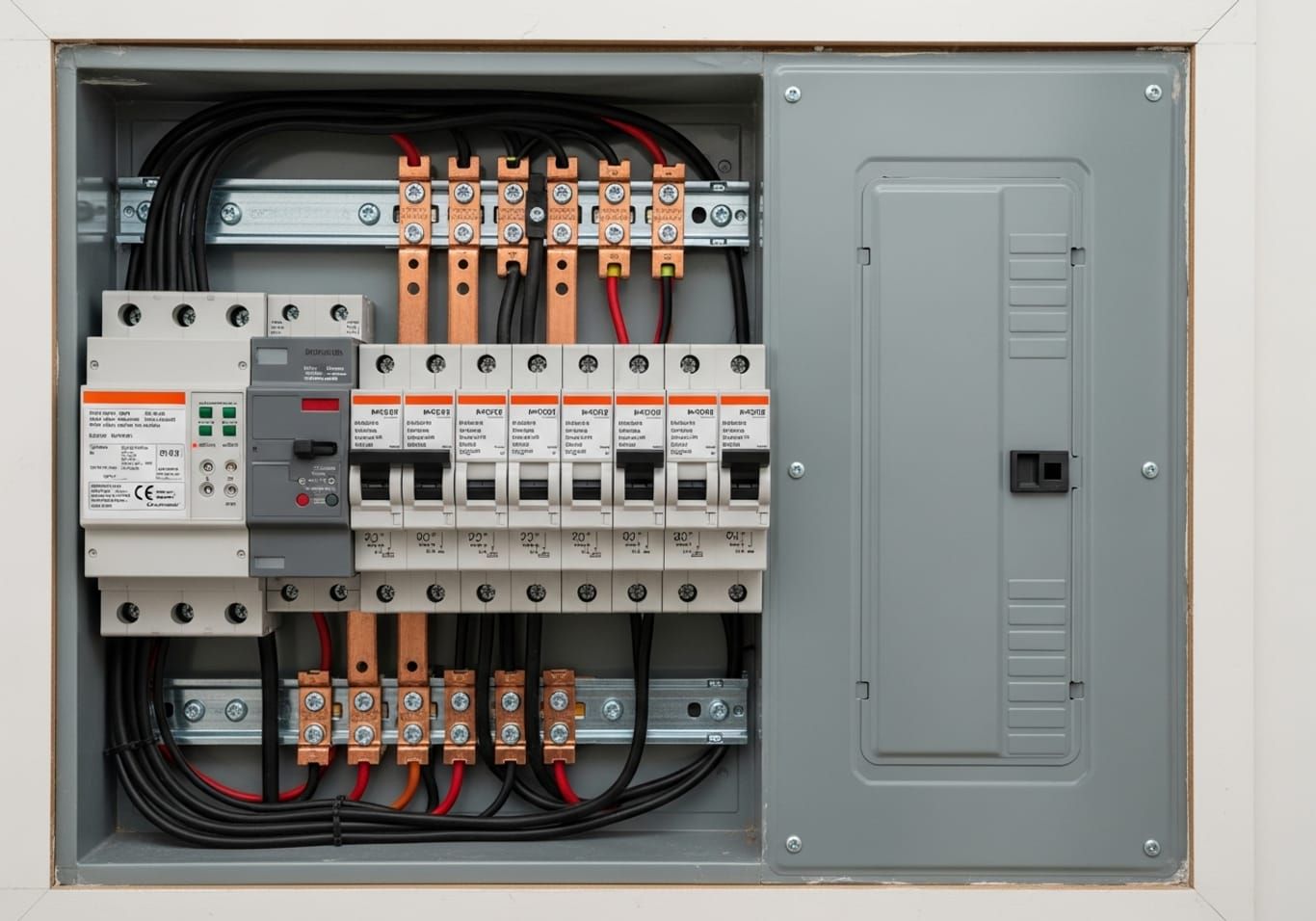
Generator + ATS + fuel supply — one automatic system
A whole-home standby system isn’t just the generator. It’s the generator, the transfer switch, the fuel supply, the concrete pad, and the wiring to your panel — all sized, permitted, and inspected. Here’s what each part does.
Standby generator vs. portable vs. no backup power
Every option has trade-offs. Here’s a direct look at the three paths homeowners in Palm Beach County typically consider — so you can make the call that fits your home and risk tolerance.
| What matters | Whole-home standby | Portable generator | No backup power |
|---|---|---|---|
| Starts automatically on outage | ✓ Yes — within 30 sec | ✗ Manual start required | ✗ No power |
| Runs the whole house (AC, fridge, etc.) | ✓ Yes — sized for full load | ✗ Partial — limited wattage | ✗ Nothing runs |
| Fuel storage required | ✓ No (NG) or large propane tank | ✗ Yes — gasoline (scarce in storms) | — N/A |
| Safe for indoor / covered use | ✓ Outdoor enclosure — safe | ✗ CO hazard — outdoor only | — N/A |
| Permitted, code-compliant install | ✓ NEC Art. 702 + local permit | ✗ Extension cords only (legal) | — N/A |
| Works while you’re away | ✓ Fully automatic | ✗ Must be home to start/refuel | ✗ No protection |
| Upfront cost | Higher — $8k–$20k+ installed | Lower — $700–$4k + fuel | None |
If a full standby system is more than the project calls for right now, we can also wire a manual transfer switch to let you safely run a portable generator into specific circuits — no back-feeding the grid. It’s a legal, permitted interim step. See our panel upgrade page for how that fits into a broader electrical plan.
Generator installation is regulated electrical work — permits required every time
A whole-home generator feeds power into your main panel. That means it is regulated under NEC Article 702, requires a local electrical permit in Palm Beach County, and must be inspected before it goes into service. A licensed electrical contractor — not a generator dealer or handyman — is who pulls that permit and signs off the work.
Choosing the right generator for your home — kW, fuel, and ATS
The single most important decision in a generator project is sizing. Undersized and it overloads in a storm, tripping on the loads you need most. Oversized and you’re paying thousands more than necessary. We calculate your home’s connected load from your panel schedule — every circuit, every motor-start surge — and match the generator to that number with a real safety margin. Here’s how the ranges break down for typical Palm Beach County homes:
- 11–14 kW (essential circuits) — runs the most critical loads: central AC (one zone), refrigerator, lights, outlets, and a well pump or sump pump. Paired with a managed-load ATS that cycles heavy appliances, this is the most cost-effective entry point for most homes.
- 22–26 kW (full-home air-cooled) — the most common choice for a 1,500–2,500 sq-ft home with one central AC system. Runs everything simultaneously, including an electric range or dryer.
- 36–48 kW (larger homes, multiple AC systems) — estates with two or more AC zones, a pool heater, or large shop equipment need a liquid-cooled unit in this range. Runtime and duty-cycle are superior to air-cooled units at sustained high load.
Natural gas vs. propane: If you have natural gas service at the house, that’s almost always the right fuel — no storage tank, no resupply logistics, and no risk of running dry during a prolonged outage. Where natural gas isn’t available (a large part of Palm Beach County), we coordinate a buried propane tank sized for your expected runtime. A 250-gallon tank gives roughly 3–5 days of full-home operation; 500+ gallons is a common choice for extended hurricane resilience. Explore estimated fuel costs on our electrical cost estimator.
Transfer switch options: A whole-house ATS connects the generator directly to the main service entrance and switches every circuit at once. A managed-load ATS (load-shedding) uses sensors to cycle high-draw appliances (AC, water heater) so a smaller generator can power the full house without overloading. We’ll recommend the right option for your load and budget during your on-site estimate — schedule one here.
Not sure what size generator your home needs? Use our cost estimator for a ballpark, then get a free on-site quote.
Try the Cost EstimatorWhat drives whole house generator installation cost
The spread between an $8,000 install and a $20,000+ install is real, and it comes down to five variables. Understanding them lets you have a smarter conversation with any contractor you talk to — including us:
- Generator kilowatt capacity — the single largest cost driver. An 11 kW air-cooled unit costs significantly less than a 26 kW or a 36 kW liquid-cooled machine. Right-sizing matters.
- Fuel type and new infrastructure — if a new gas line or a propane tank installation is needed, add $500–$3,000+ to the project depending on distance and tank size. Existing natural gas service is the most economical path.
- Transfer switch type — a full-house ATS costs more than a managed-load unit but eliminates complexity. For some homes the managed-load approach is the smarter choice for both cost and reliability.
- Electrical panel condition — if your main panel is undersized, has double-tapped breakers, or is an older Federal Pacific / Zinsco unit that should be replaced, that work is logically done in the same project. See our panel upgrade page.
- Conduit run length and site conditions — a generator located 50 feet from the panel in a crawl space costs more to wire than one 10 feet away on a concrete slab. We scope this at the free estimate so there are no surprises.
Every quote we give is written, itemized, and all-in — generator, ATS, pad, wiring, and the permit fee. Use the electrical cost estimator to get a quick range, then request a free on-site estimate for the number that actually fits your home.
Generator installation at a glance
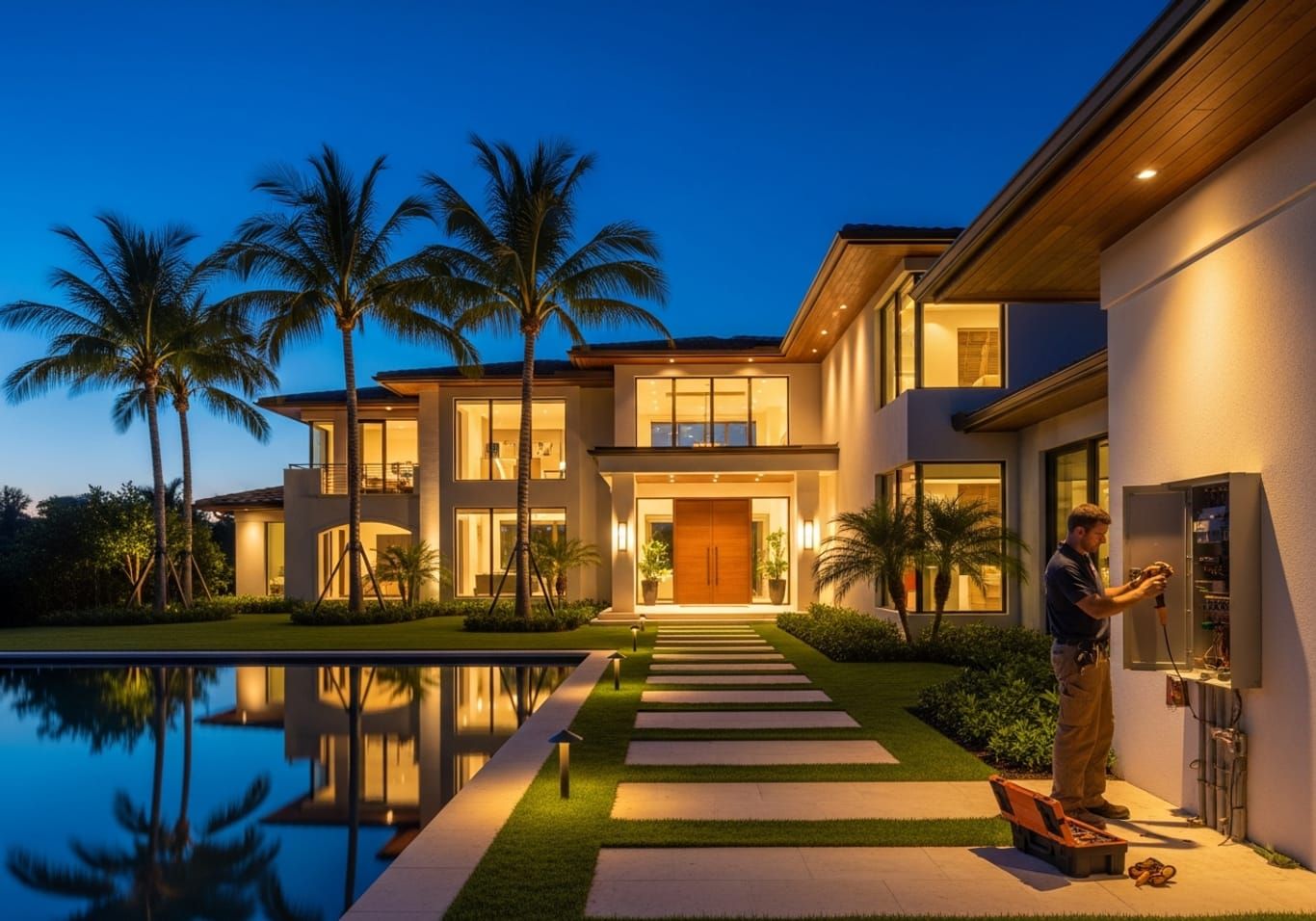
When the grid goes down, your home keeps going
In Palm Beach County, a major storm can leave neighborhoods dark for days or weeks. A whole-home standby generator means your AC runs, your food stays cold, your sump pump keeps the garage dry, and you charge your devices without a second thought. We size, install, and permit the system so it’s ready before the next storm — not after.
Generator installation is one part of the whole electrical picture
A generator project often surfaces other electrical needs: a panel that’s too small to carry the added load, wiring that’s too old to trust, or circuits that should be on their own breaker before you add generator power. We handle all of it under one roof — a panel upgrade before or alongside the generator install, rewiring for older homes, and EV charger installation for homeowners who want a complete energy-independence setup. Every project is permitted and inspected.
We also offer 24/7 emergency electrical service across all 11 communities we serve in Palm Beach County — because electrical problems don’t keep business hours, and neither do we. If you need a licensed electrician right now, call (561) 919-9037.
Ready to price out your generator project? Start with the electrical cost estimator, or go straight to a free on-site estimate and we’ll scope the system, size it to your load, and put a clear written number in your hands — no pressure, no call center.
Whole-home generator FAQs
How much does whole house generator installation cost in Palm Beach County?
What size whole-home standby generator do I need?
What is an automatic transfer switch (ATS) and why do I need one?
Do you pull permits for generator installations in Palm Beach County?
Will a standby generator protect my home through a Florida hurricane?
Ready for whole-home backup power that starts itself?
Tell us about your home and a licensed electrician will size the generator, scope the transfer switch, handle the permit, and give you a clear written quote — no pressure, no call center. Serving all 11 communities across Palm Beach County.