Whole-home rewiring, done to code and on permit.
Aluminum wiring, knob-and-tube, degraded circuits, or a full gut renovation — when the job is the whole house, we rewire it right. Licensed FL electrician, permits pulled, inspected to NEC code.
What a whole-home rewire actually means
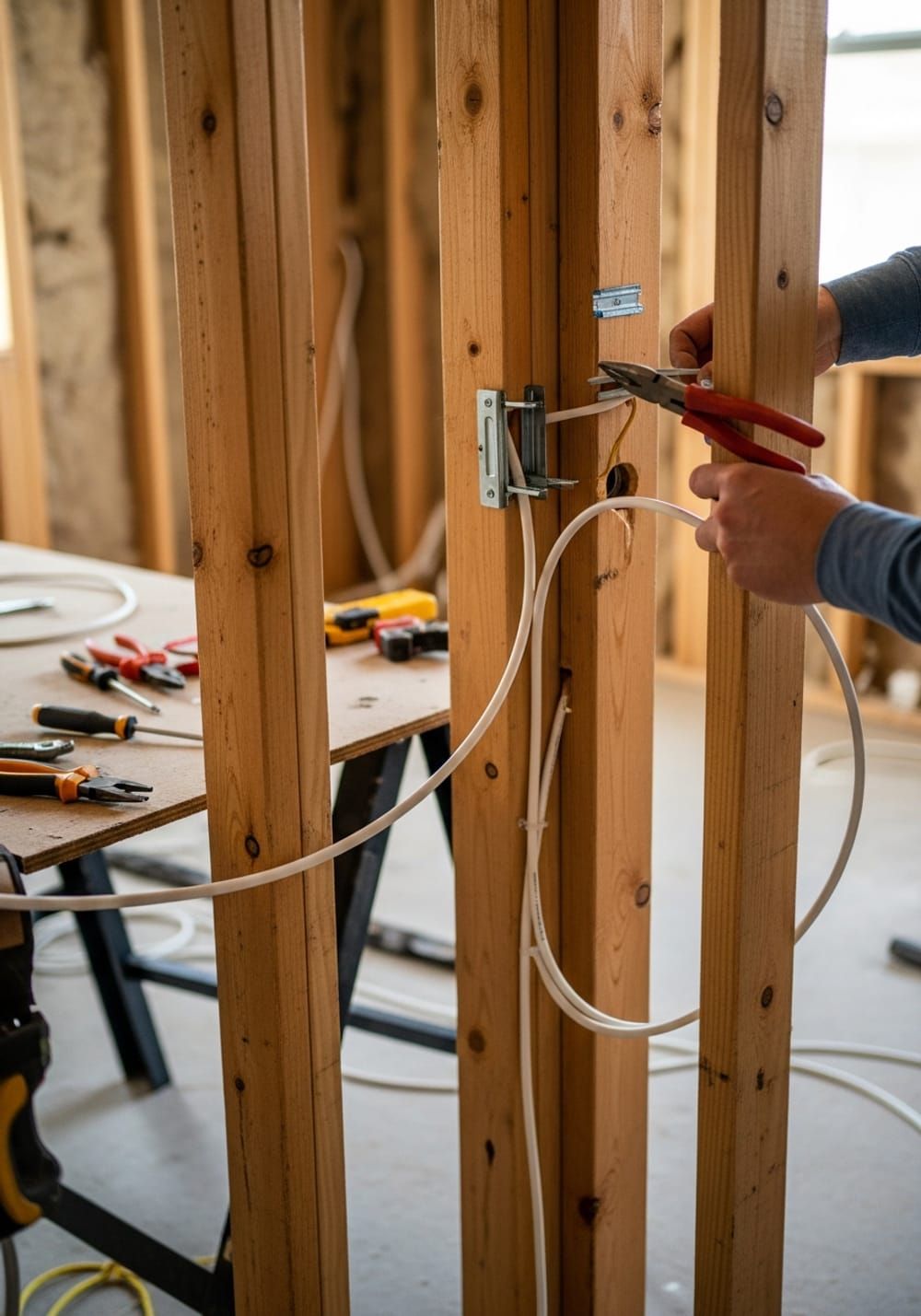
A whole-home rewire is exactly what it sounds like: every branch circuit in the house — outlets, switches, lights, appliance circuits, the works — is replaced with new, correctly sized copper wiring pulled to the panel. The old wiring comes out (or, where it’s inaccessible, is abandoned in place and capped), and the new system is installed to the current National Electrical Code (NEC) as adopted by Florida, with every circuit labeled, every device grounded, and AFCI/GFCI protection in the locations the code requires.
At the end, a county inspector signs off on the work. That permit record follows the house — it is the documentation that tells your insurer, your future buyer, and the county that the electrical system was done right by a licensed contractor. We do not do unpermitted electrical work.
A rewire is most often the right call in three situations: the home has aluminum branch-circuit wiring, knob-and-tube wiring, or wiring that is so deteriorated, undersized, or repeatedly patched that a clean replacement is more cost-effective than chasing problems. Major renovations — where the walls are open anyway — are also a natural moment to take it all the way.
Aluminum wiring, knob-and-tube, and code upgrades — we handle all three
Palm Beach County's housing stock spans every decade from the 1920s to last year. Depending on when your home was built, you may be living with one of three wiring systems that insurers flag, inspectors flag, and licensed electricians strongly recommend replacing.
Full copper replacement vs. COPALUM pigtailing
If your home has aluminum branch-circuit wiring (the small-gauge wiring to outlets, switches, and light fixtures — not the large aluminum service entrance cable that is still standard and code-correct today), there are two CPSC- and NEC-recognized remediation paths:
- Full copper rewire — the aluminum wiring is replaced circuit by circuit with new copper conductors. It requires opening walls in more locations, costs more upfront, and takes longer. It is the cleanest long-term solution: when you are done, the home has no aluminum branch circuits anywhere.
- COPALUM crimp pigtailing — a licensed electrician installs a special crimped copper pigtail at every device, splice, and connection in the home using the UL-listed COPALUM connector. The aluminum wire stays in the walls but every connection is now copper-to-copper. It is less invasive and typically lower cost, but must be done at every single connection — a partial job is not an approved remediation.
Which is right for your home depends on the size of the house, wall access, the panel condition, and your plans. We walk through both paths at the estimate visit and quote each option in writing.
| Full Copper Rewire | COPALUM Pigtailing | |
|---|---|---|
| What it does | Replaces all aluminum branch circuits with copper | Installs copper pigtail at every connection; aluminum stays in walls |
| Wall opening | More access points required | Minimal — outlet-box-by-box work |
| Long-term result | No aluminum branch circuits anywhere | All connections are copper-to-copper |
| Code status | NEC-compliant new wiring | CPSC & UL-listed repair method |
| Best fit | Renovation, walls open, or long-term hold | Intact home, minimal disruption preferred |
| Relative cost | Higher — full circuit replacement | Lower — connection-by-connection labor |
Why whole-home rewiring pays off in Palm Beach County
Not sure if your home needs a full rewire? Use our estimator or book a free on-site assessment in Palm Beach County.
Try the Cost EstimatorAdding circuits and bringing the whole house up to code
Not every rewiring project starts with failing wiring. Sometimes the trigger is simply that a 1970s house was wired for a 1970s load — and you are running a modern kitchen, a home office, an EV charger, and a whole-home generator off a panel that was sized for none of those things. The result is tripped breakers, undersized circuits, and zero room to grow.
A full rewire is the moment to get everything right at once:
- Dedicated appliance circuits — refrigerators, dishwashers, microwaves, washers, and dryers each get their own circuit, correctly sized, rather than sharing a general-purpose run.
- AFCI protection — arc-fault circuit interrupters on bedroom and living-area circuits, as required by current NEC for new installations in Florida.
- GFCI protection — ground-fault protection in all wet locations (bathrooms, kitchen, garage, exterior, pool areas) meeting current NEC.
- Equipment grounds — every circuit brought to the three-wire grounded standard modern appliances, surge protectors, and GFCI receptacles require.
- Panel upgrade — if the existing panel is undersized, outdated, or a recalled brand, we pair the rewire with a panel upgrade in a single coordinated project.
If you want a dedicated circuit for an EV charger or a standby generator interlock, the rewire is the natural moment to rough those in before the walls close.
What rewiring a home costs in Palm Beach County
Rewiring a whole home is a significant project, and the cost reflects that — but the drivers vary enough between homes that a phone quote is not useful. The real number depends on:
- Home size and circuit count — square footage and the number of circuits to replace or add.
- Stories and wall access — a two-story home with finished ceilings takes more labor than an open single story or a house in active renovation.
- Panel upgrade — whether the existing panel needs to be replaced at the same time (often the case in older homes).
- Remediation path — full copper replacement vs. COPALUM pigtailing for aluminum wiring, as described above.
- Drywall patching — the extent of repair and painting after new wiring is run.
For a planning-range estimate, our electrical cost estimator models the major cost drivers and gives you a realistic budget range in under a minute — before you ever pick up the phone. When you are ready for the real number, book a free on-site visit and we’ll walk the house, count the circuits, and leave you with a written quote.

A home that’s safe to insure, safe to sell, and safe to live in.
When the rewire is done and the permit is signed off, you have a documented modern electrical system that your insurer will write, your future buyer's inspector won't flag, and that won't wake you up at 3 a.m. worrying about aluminum connections or knob-and-tube in the walls. That peace of mind is what the work is actually for. Palm Beach County homeowners have trusted us with this project — we pull the permits, we do the work, we hand you the inspection record.
When wiring can’t wait
Sometimes a rewiring need surfaces as an emergency — a burning smell from an outlet, a tripped AFCI that won’t reset, an inspector red-tagging a panel during a sale. Our licensed crew offers 24/7 emergency electrical service across Palm Beach County for situations that can’t wait for a scheduled estimate. Call (561) 919-9037 any time — we answer.
If the emergency reveals a broader wiring problem (as it often does), we can scope the full rewire at the same visit and give you a path forward.
House rewiring FAQs
When does a home need to be fully rewired?
Is aluminum wiring dangerous, and how is it fixed?
What is knob-and-tube wiring, and should I replace it?
How long does a whole-home rewiring take?
How much does house rewiring cost in Palm Beach County?
See what rewiring your home would actually cost.
A licensed electrician walks the house, documents every circuit, and gives you a written quote — with a realistic timeline and a clear permit plan. No pressure, no call center.